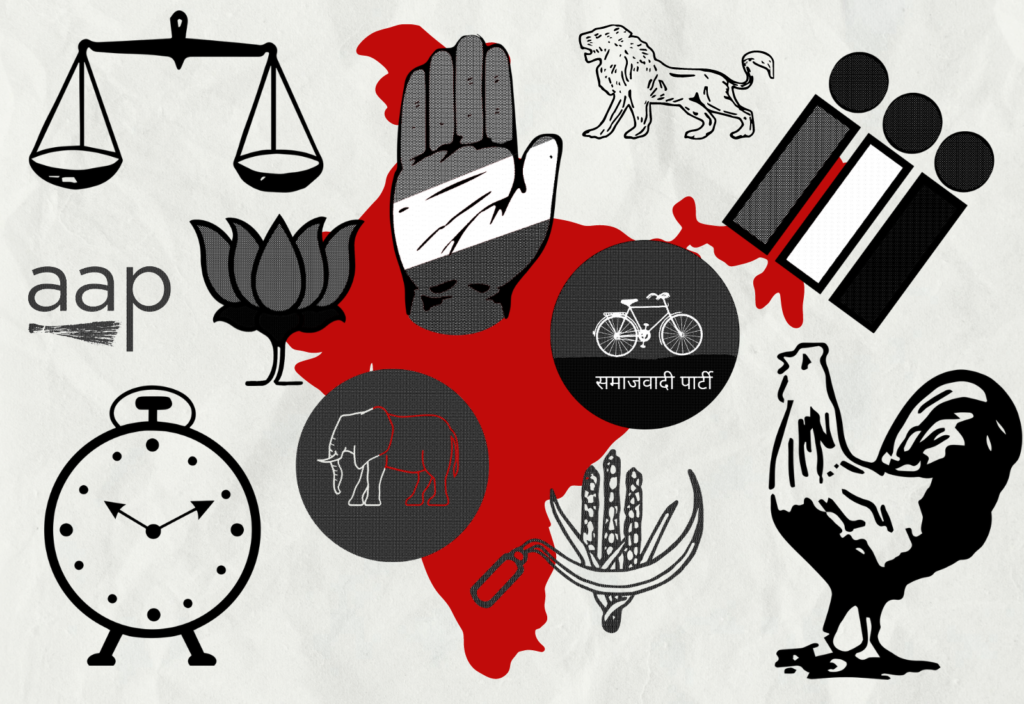
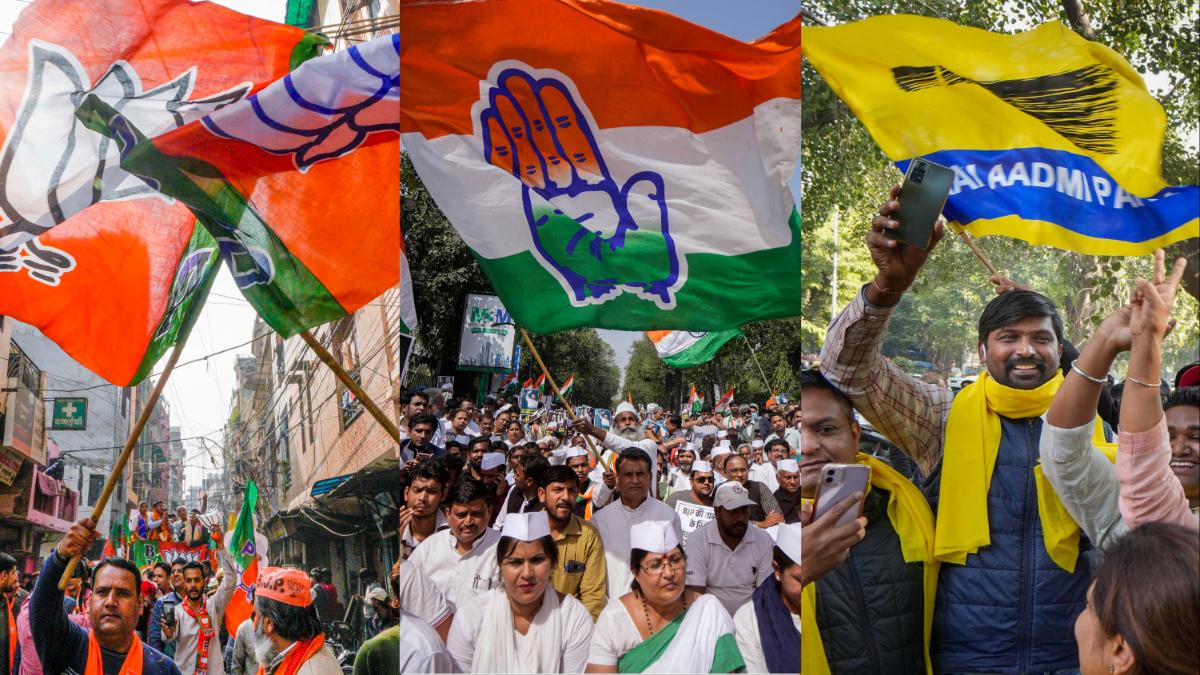
India has a multi-party system. The Election Commission of India (ECI) grants recognition to national-level and state-level political parties based on objective criteria. A recognised political party enjoys privileges such as a reserved party symbol, free broadcast time on state-run television and radio, consultation in the setting of election dates, and giving input in setting electoral rules and regulations. Other political parties wishing to contest local, state, or national elections must be registered with the ECI. Registered parties can be upgraded to recognized national or state parties by the ECI if they meet the relevant criteria after a Lok Sabha or state legislative assembly election. The ECI periodically reviews the recognized party status.
Before the amendment in 2016 (which came into force on 1 January 2014), if a political party failed to fulfill the criteria in the subsequent Lok Sabha or state legislative assembly election, it would lose its status as a recognized party. In 2016, the ECI announced that a review would take place after two consecutive elections instead of after every election. Therefore, a political party will retain its recognized party status even if it does not meet the criteria in the next election. However, if it fails to meet the criteria in the election following the next one, it would lose its status.
As per latest publications dated 23 March 2024 from Election Commission of India, and subsequent notifications, there are 6 national parties, 58 state parties, and 2,763 unrecognised parties. All registered parties contesting elections need to choose a symbol from a list of available symbols offered by the EC. All 29 states of the country along with the union territories of Jammu and Kashmir, National Capital Territory of Delhi, and Puducherry have elected governments unless President's rule is imposed under certain condition.
National parties
A registered party is recognised as a national party only if it fulfills any one of the three conditions listed below:
- If its candidates have secured at least 6% of total valid votes in at least 4 states (in latest Lok Sabha or Assembly elections) and the party has at least 4 MPs in the last Lok Sabha polls.
- If it has won at least 2% of the total seats in the Lok Sabha from at least 3 states.
- It is ‘recognised’ in four or more states.
State parties
A registered party is recognised as a state party only if it fulfils any one of the five conditions listed below:
- A party should secure at least six per cent of valid votes polled in an election to the state legislative assembly and win at least two seats in that state assembly.
- A party should secure at least six per cent of valid votes polled in an election to Lok Sabha and win at least one seat in Lok Sabha.
- A party should win at least three per cent of the total number of seats or any fraction thereof allotted to that state.
- At least one MP for every 25 members or any fraction allotted to the state in the Lok Sabha.
- Under the liberalised criteria, one more clause that it will be eligible for recognition as state party if it secures eight per cent or more of the total valid votes polled in the state.
Unrecognised parties
Defunct political parties
See also
- Lists of political parties
- List of communist parties in India
Notes
References
Further reading
- Subrata K. Mitra and V. B. Singh. 1999. Democracy and Social Change in India: but parties have to be 70per of decision A Cross-Sectional Analysis of the National Electorate. New Delhi: Sage Publications. ISBN 81-7036-809-X (India HB) ISBN 0-7619-9344-4 (U.S. HB).
- Subrata K. Mitra, Mike Enskat, Clemens Spiess (eds.). 2004. Political Parties in South Asia. Greenwood: Praeger.
- Political Parties, Democratic Politics II, Textbook in Political Science for Class X, NCERT